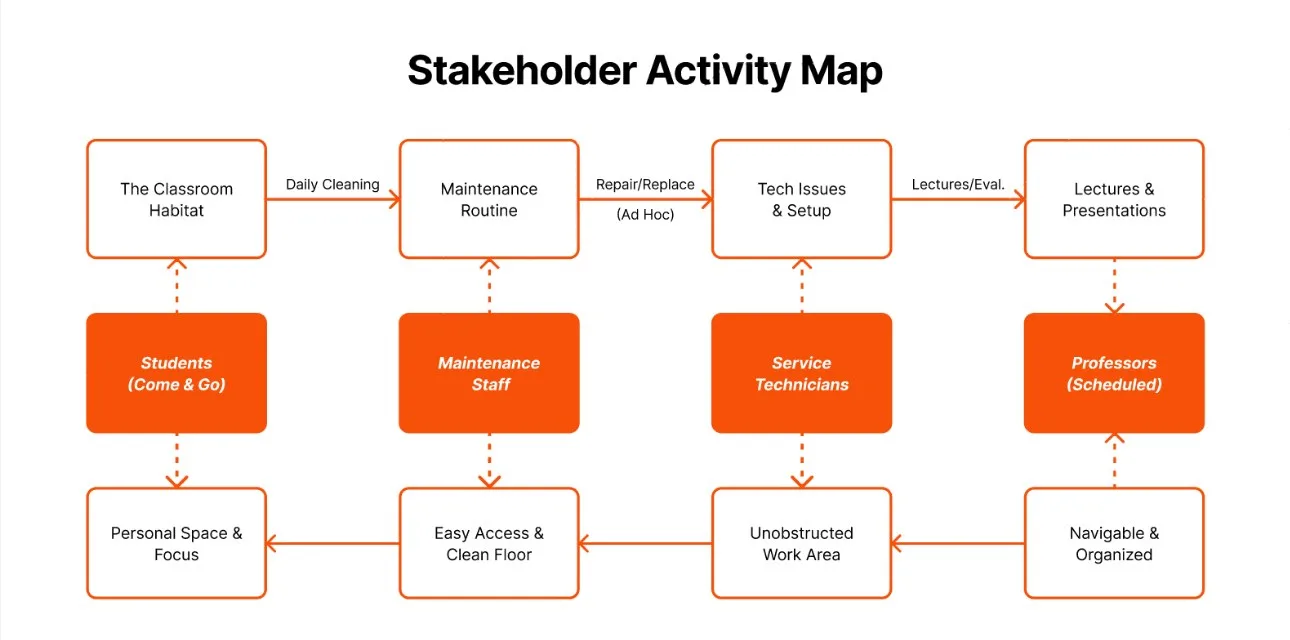
Creative Engineering Design at IISc is a method more than a brief: observe a real habitat, find the problem worth solving, write a solution-neutral problem statement, then generate, improve and evaluate concepts with tools like function structures, TRIZ, FMEA and weighted objectives. We ran it twice.
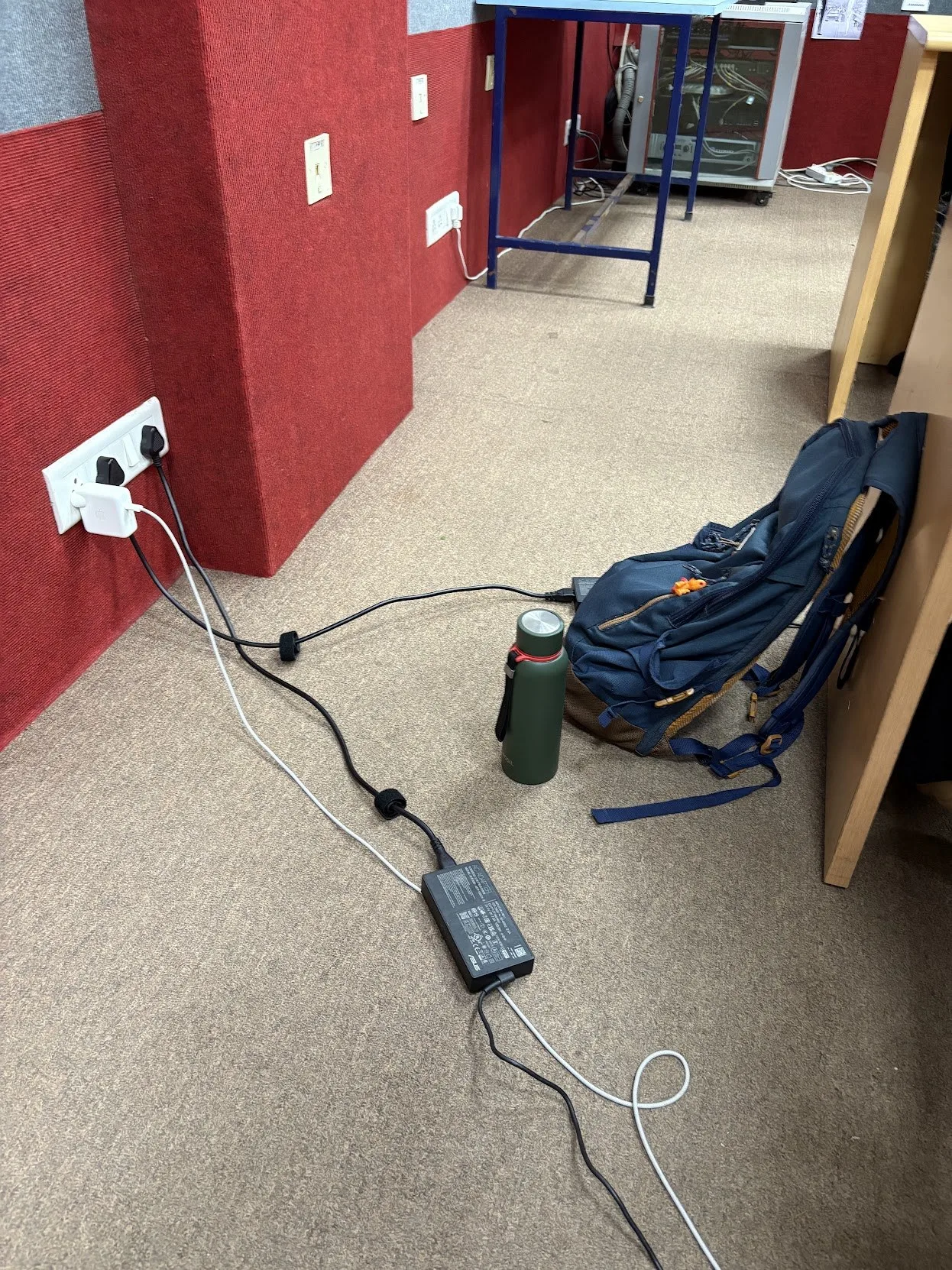
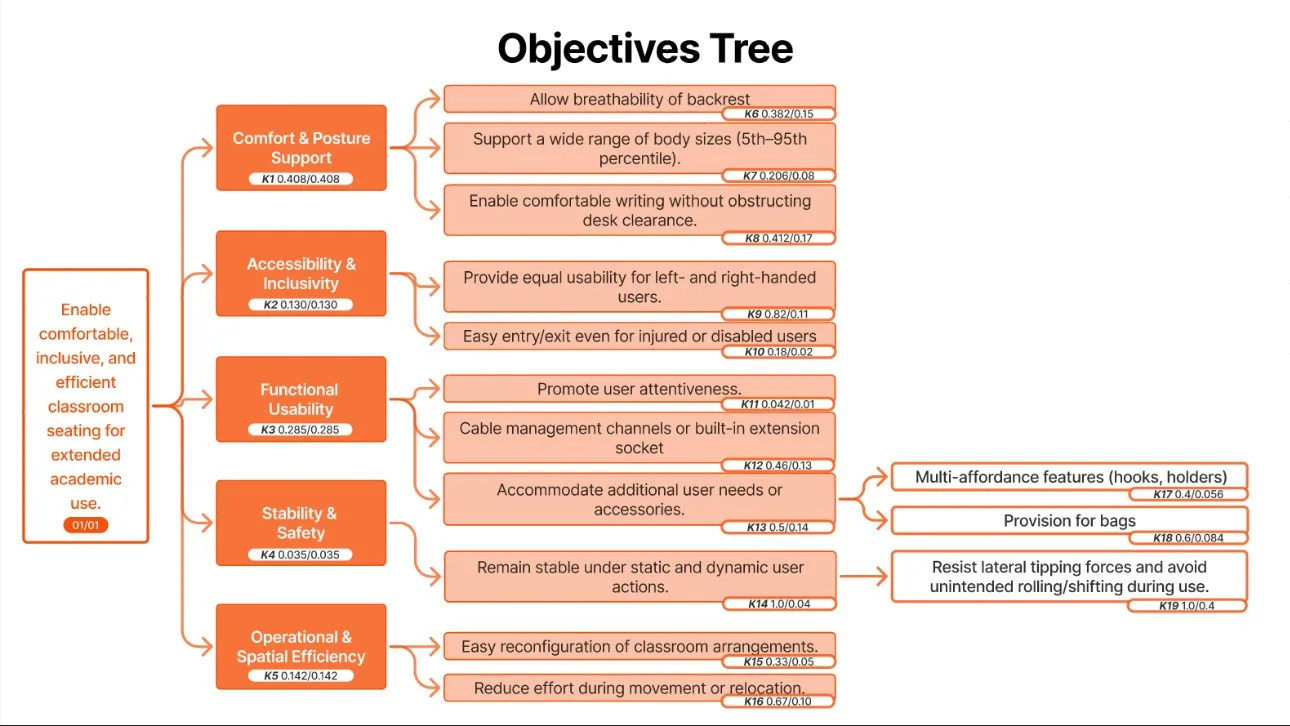
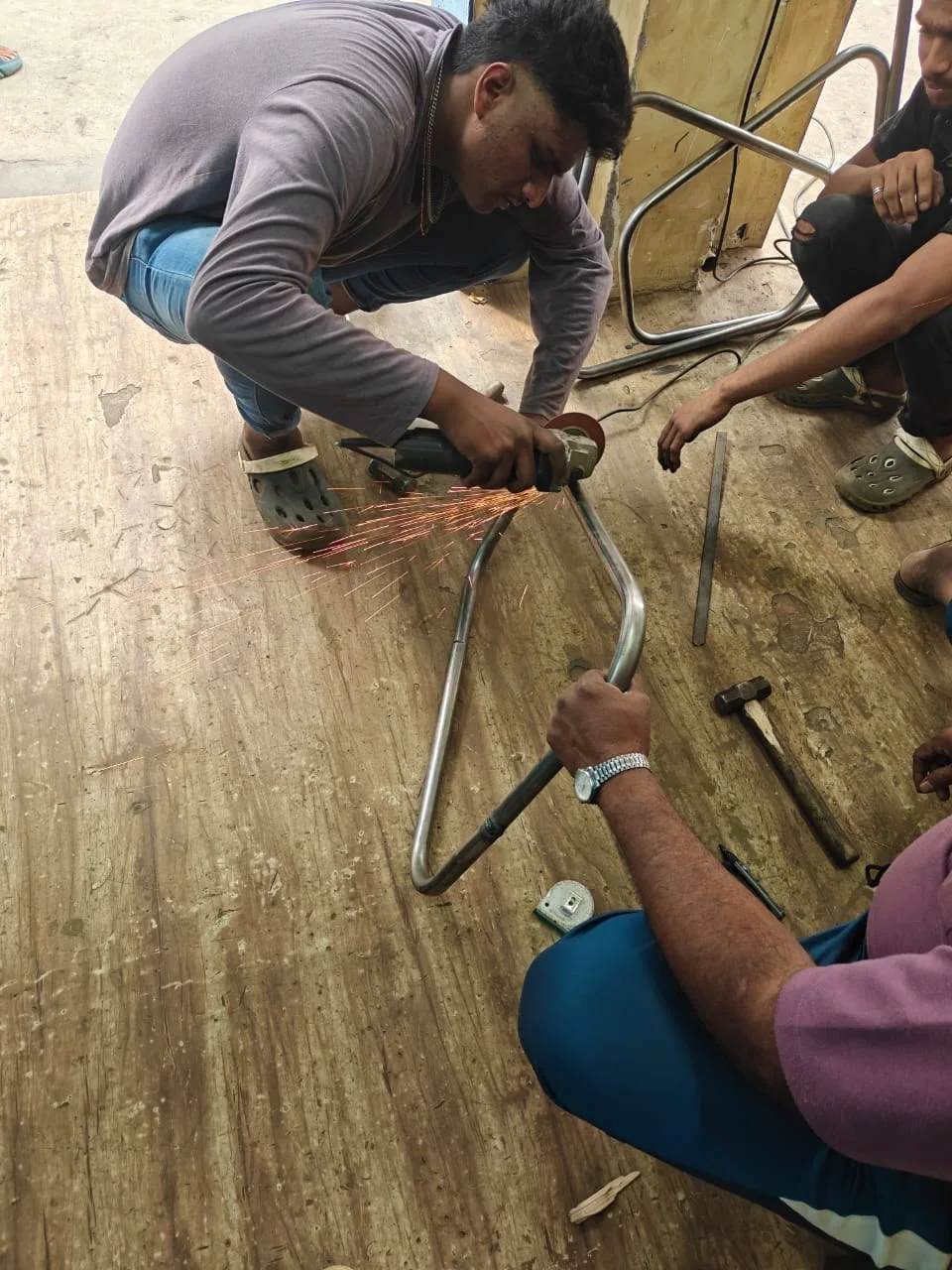
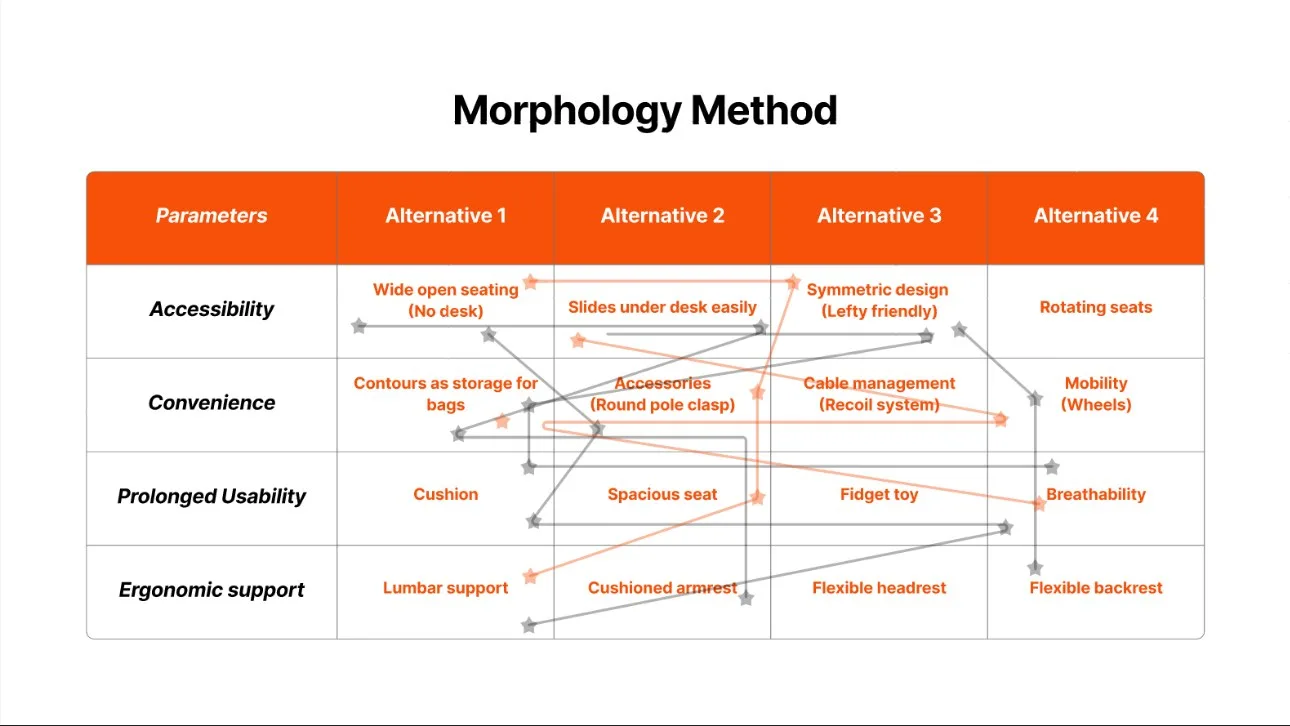
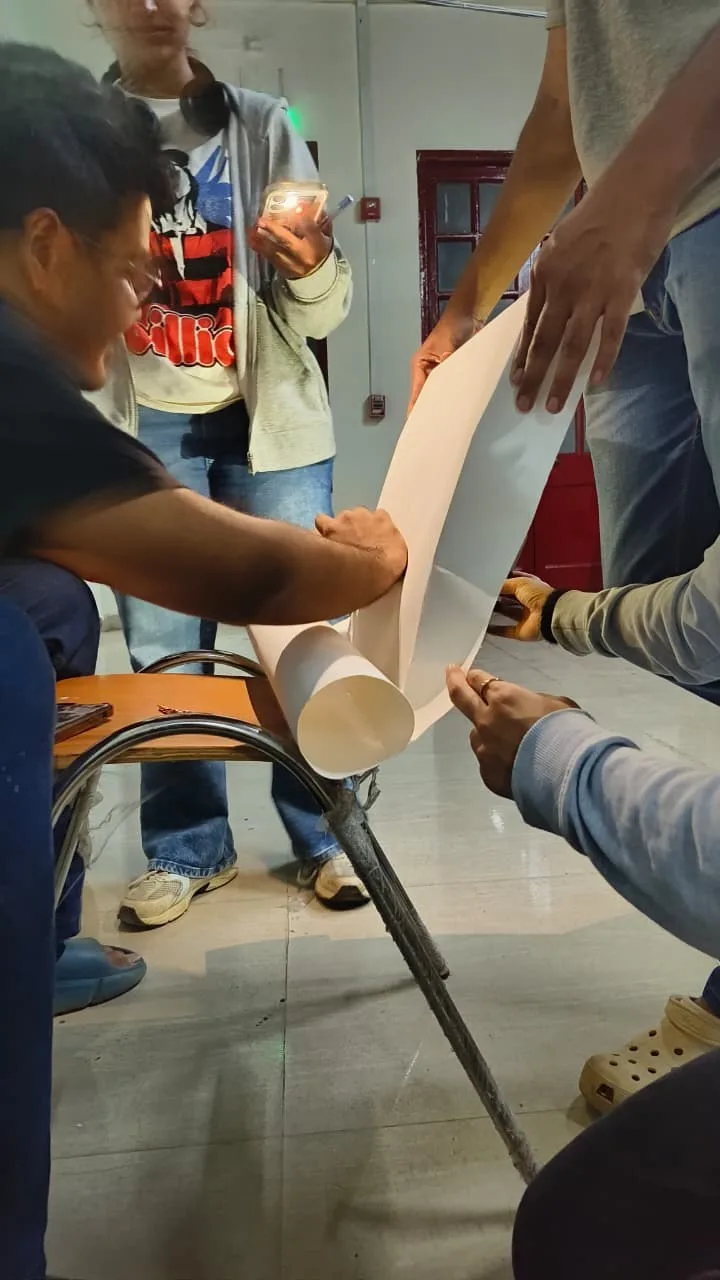
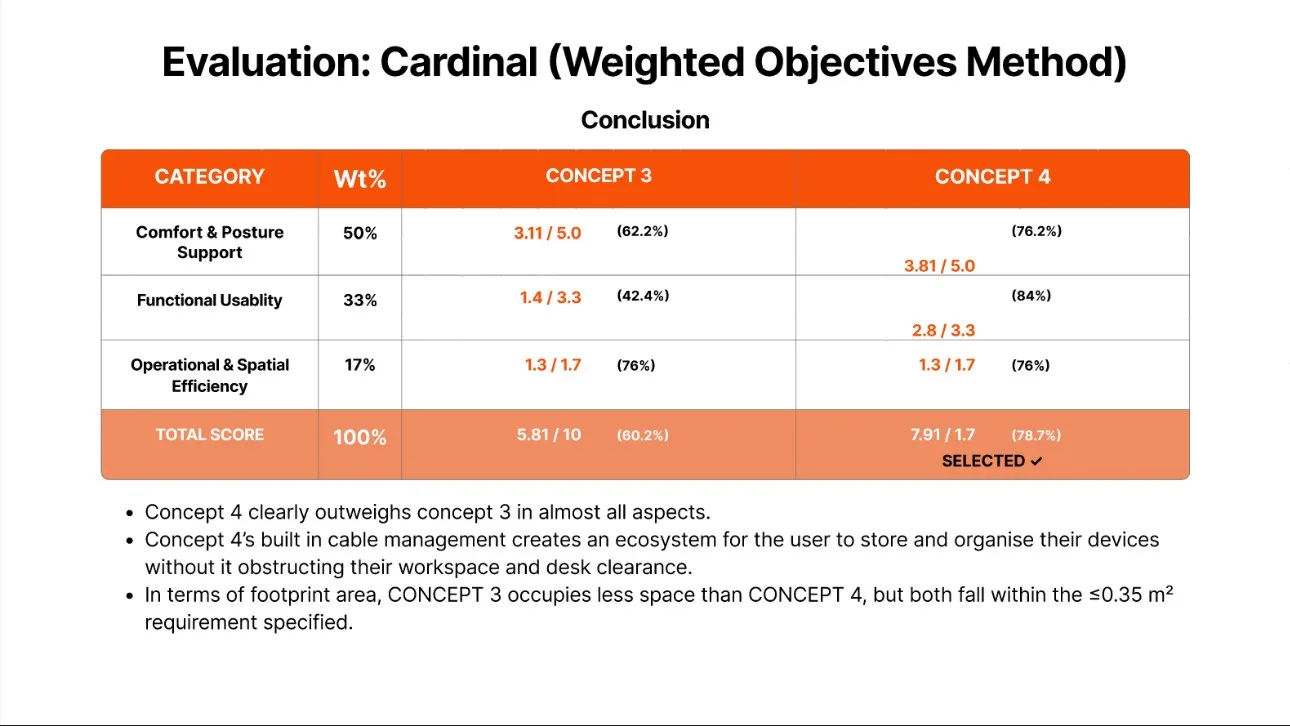
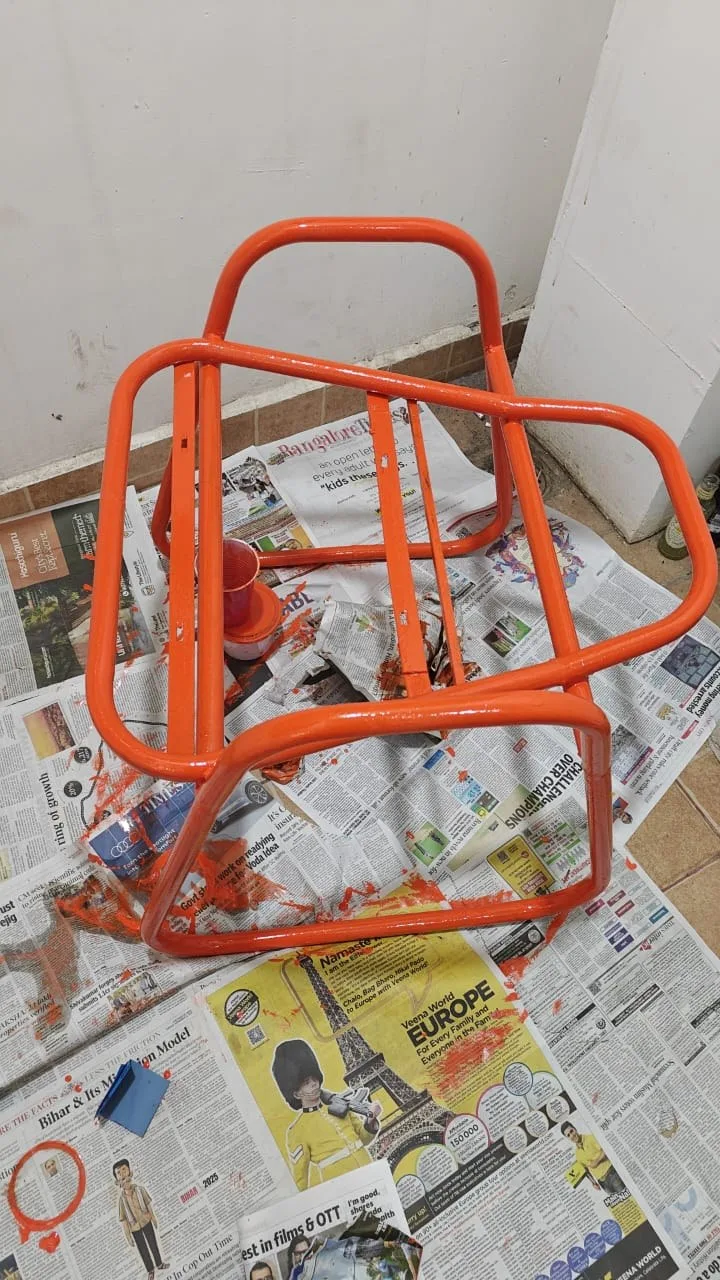
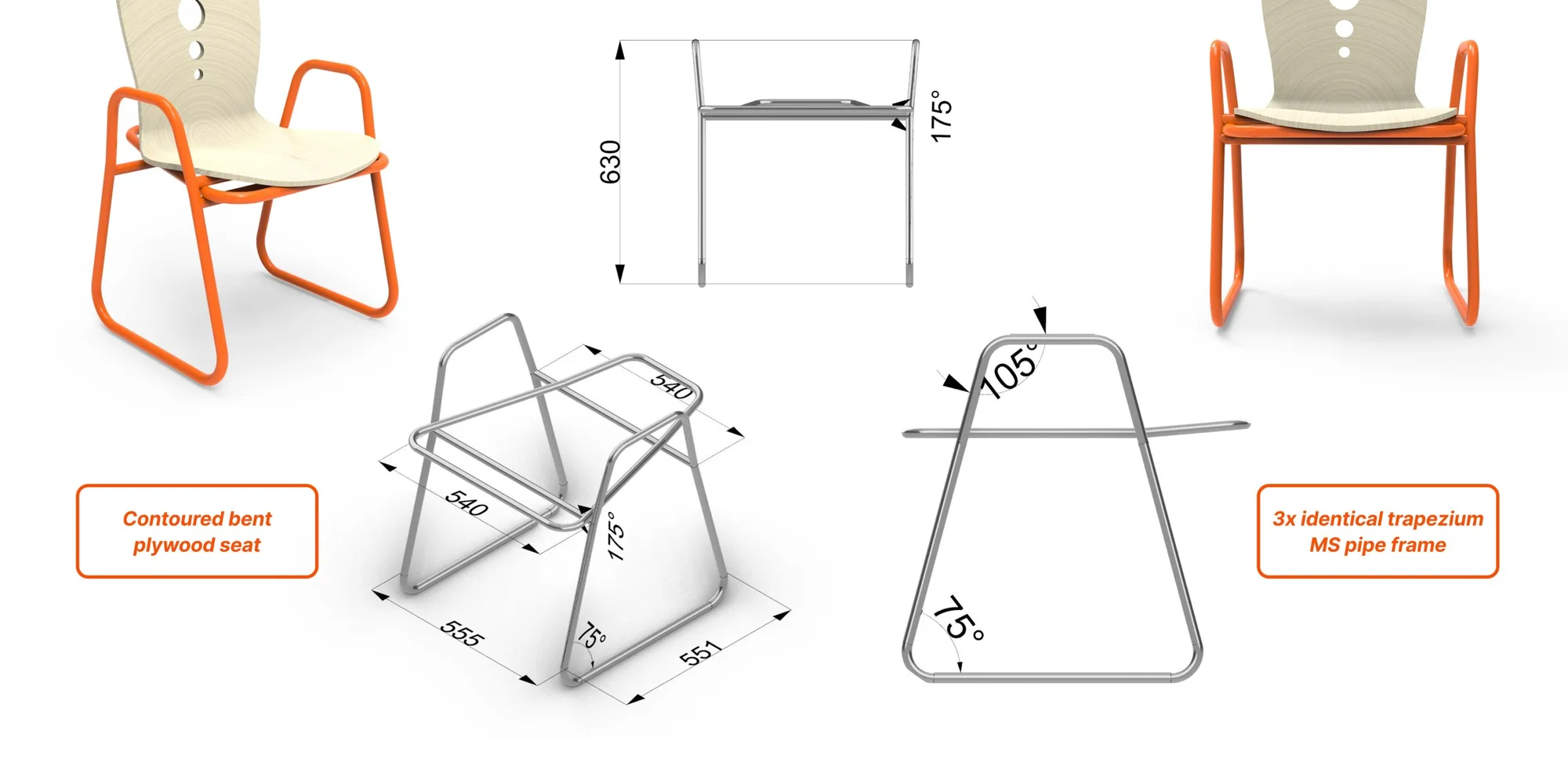
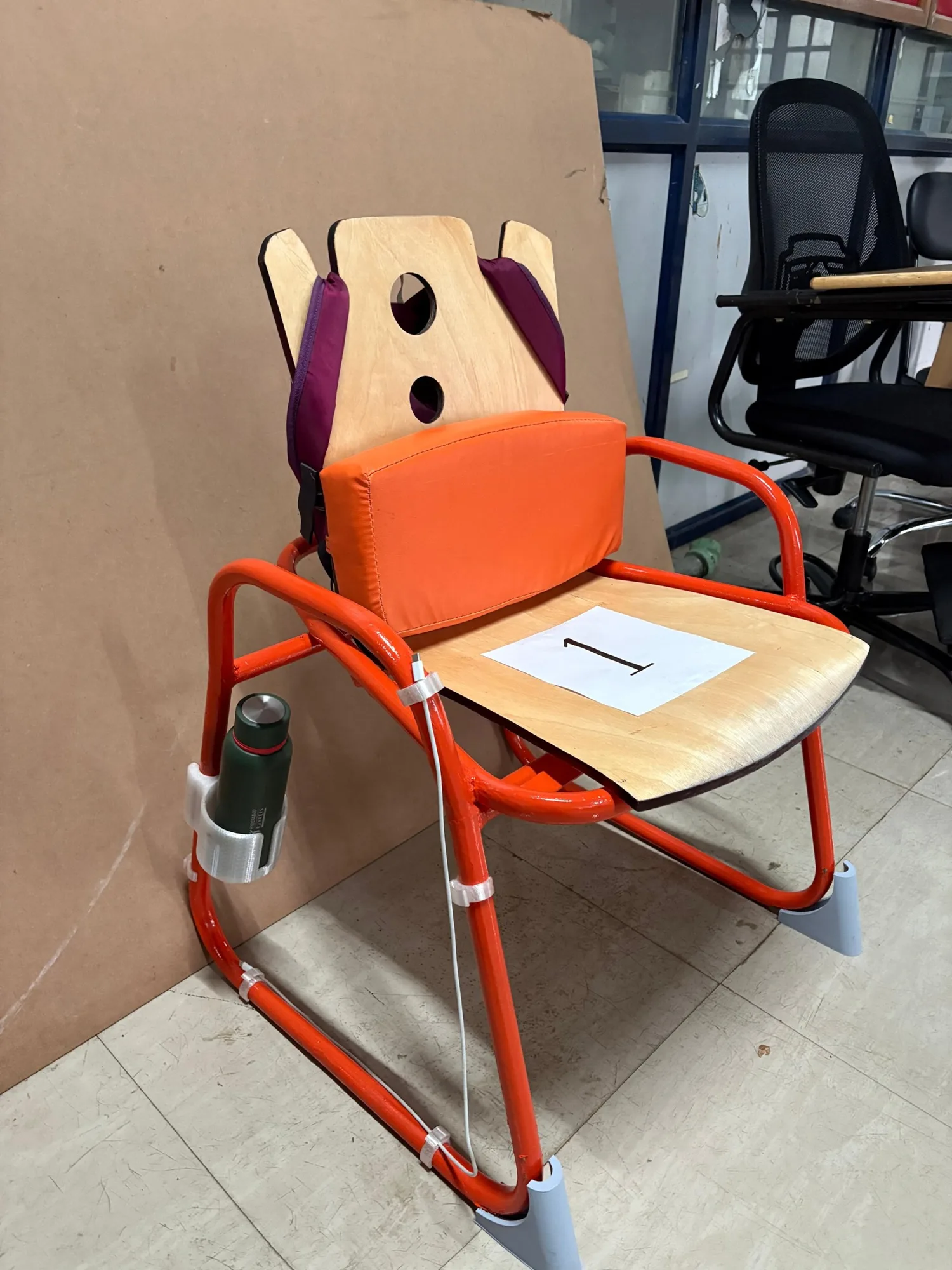
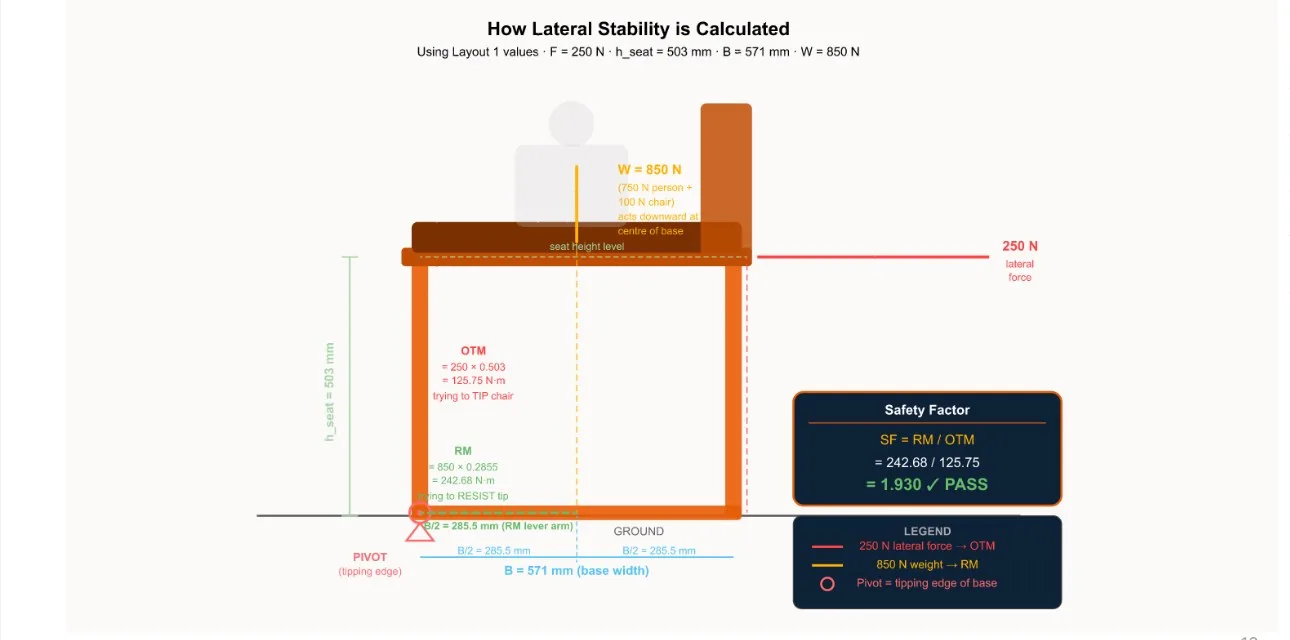
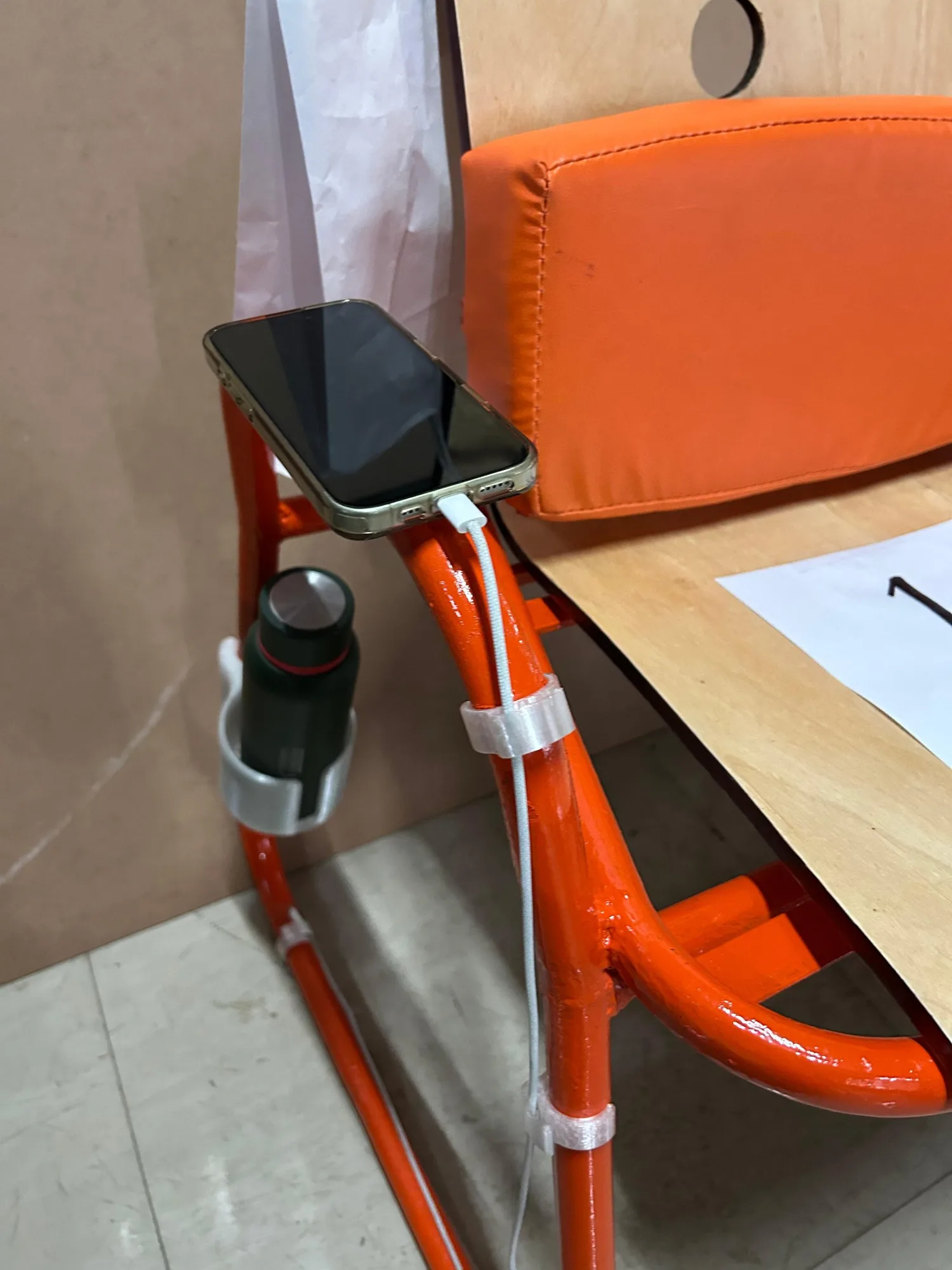
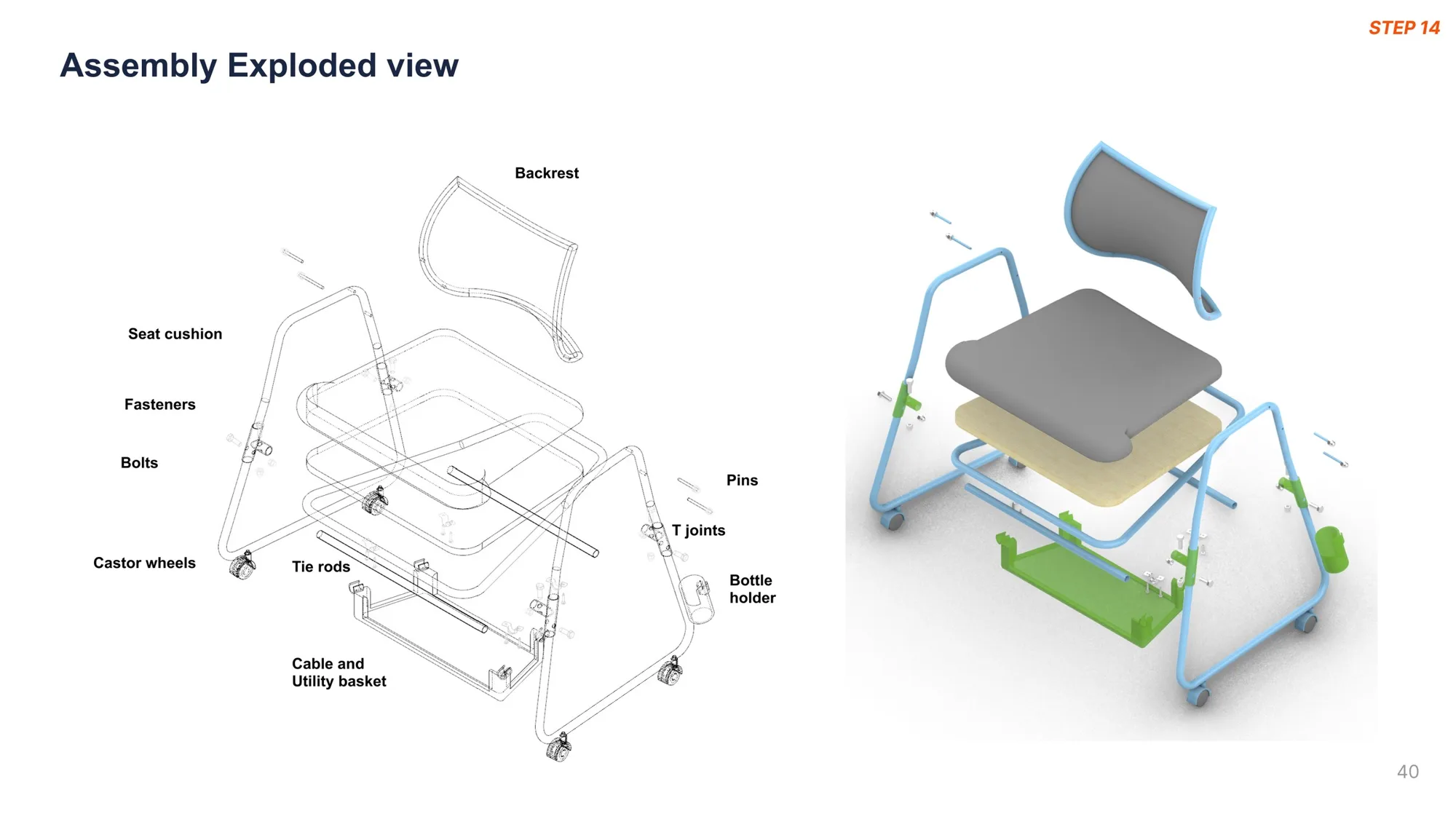
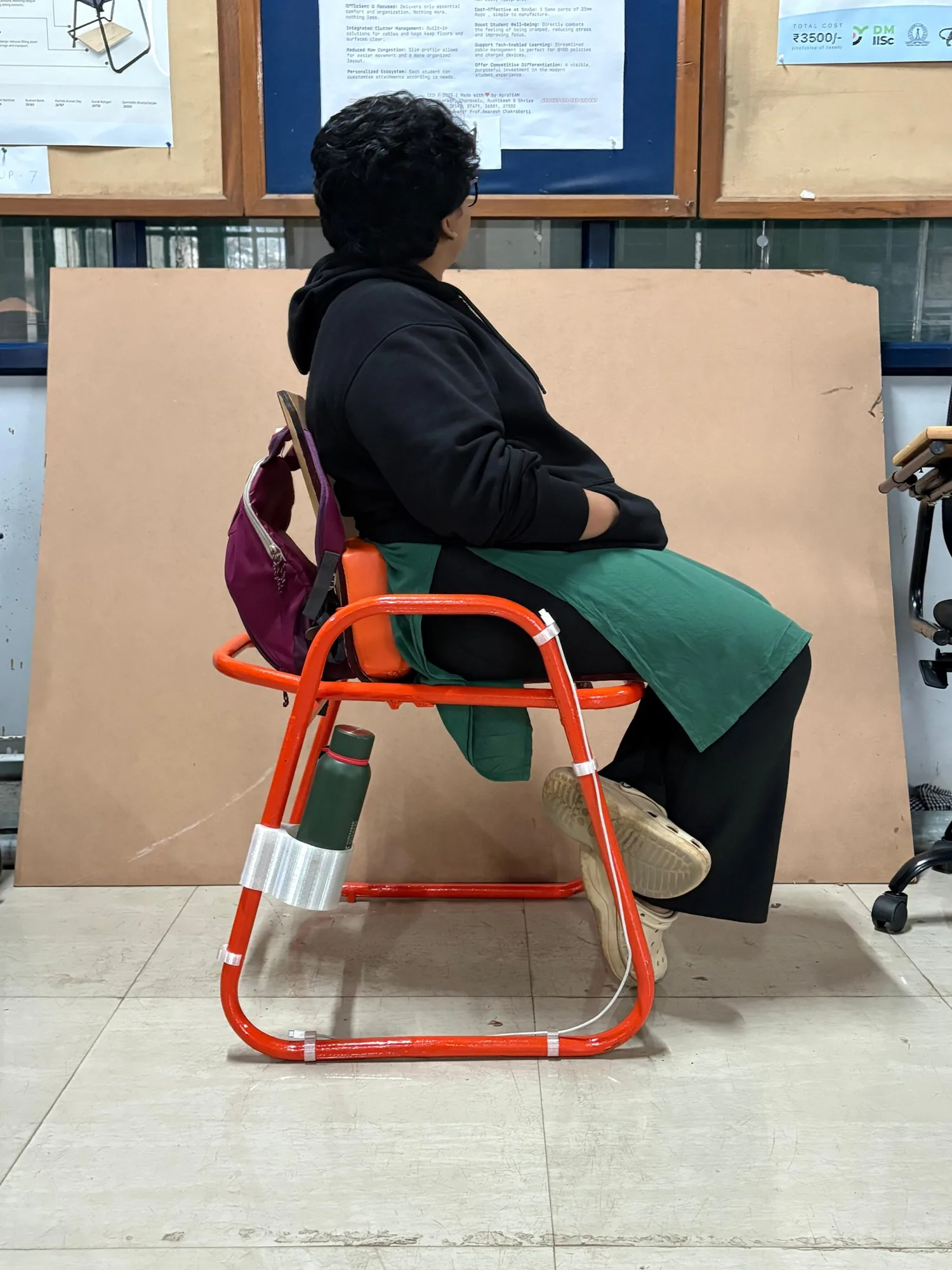
TRIPLYZIUM started in our own lecture halls: narrow aisles, bags in the walkways and charger cables caught in chair wheels. Interviews and a requirement checklist led to a function structure and ten concepts; a weighted-objectives evaluation chose the one with built-in storage and cable management. Then we built it: three identical bent mild-steel trapezium frames, a bent-plywood seat, a bright orange finish, and 3D-printed bottle holders and cable clips. In Embodiment Design we took it further, with four layouts checked for footprint, tipping under a 250 N side load and push force, an exploded assembly and a ₹3,500 parts list.
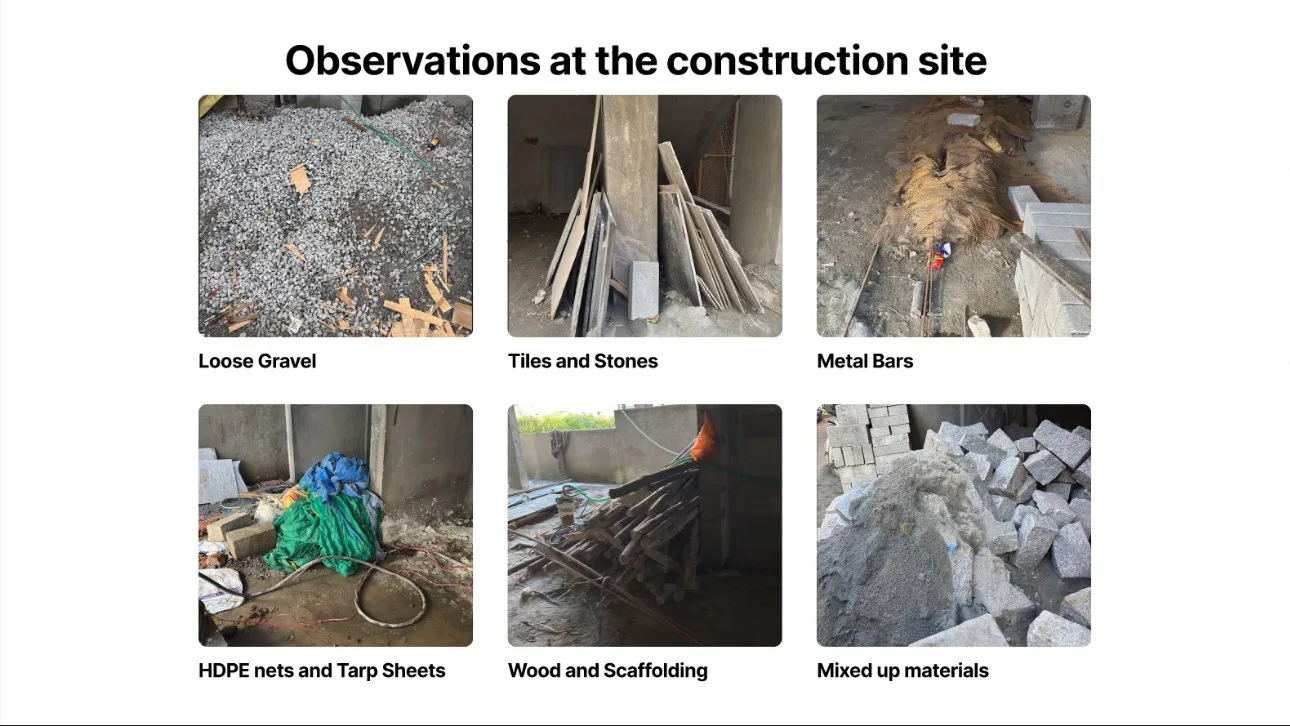
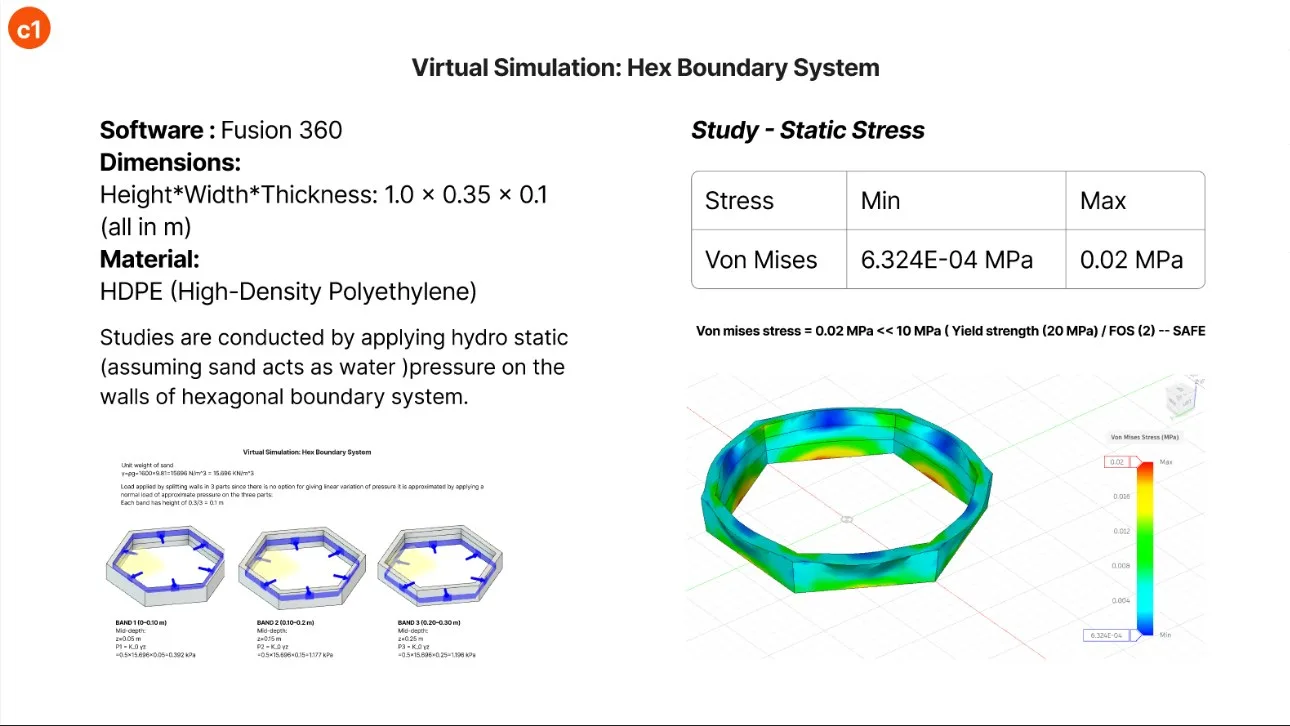
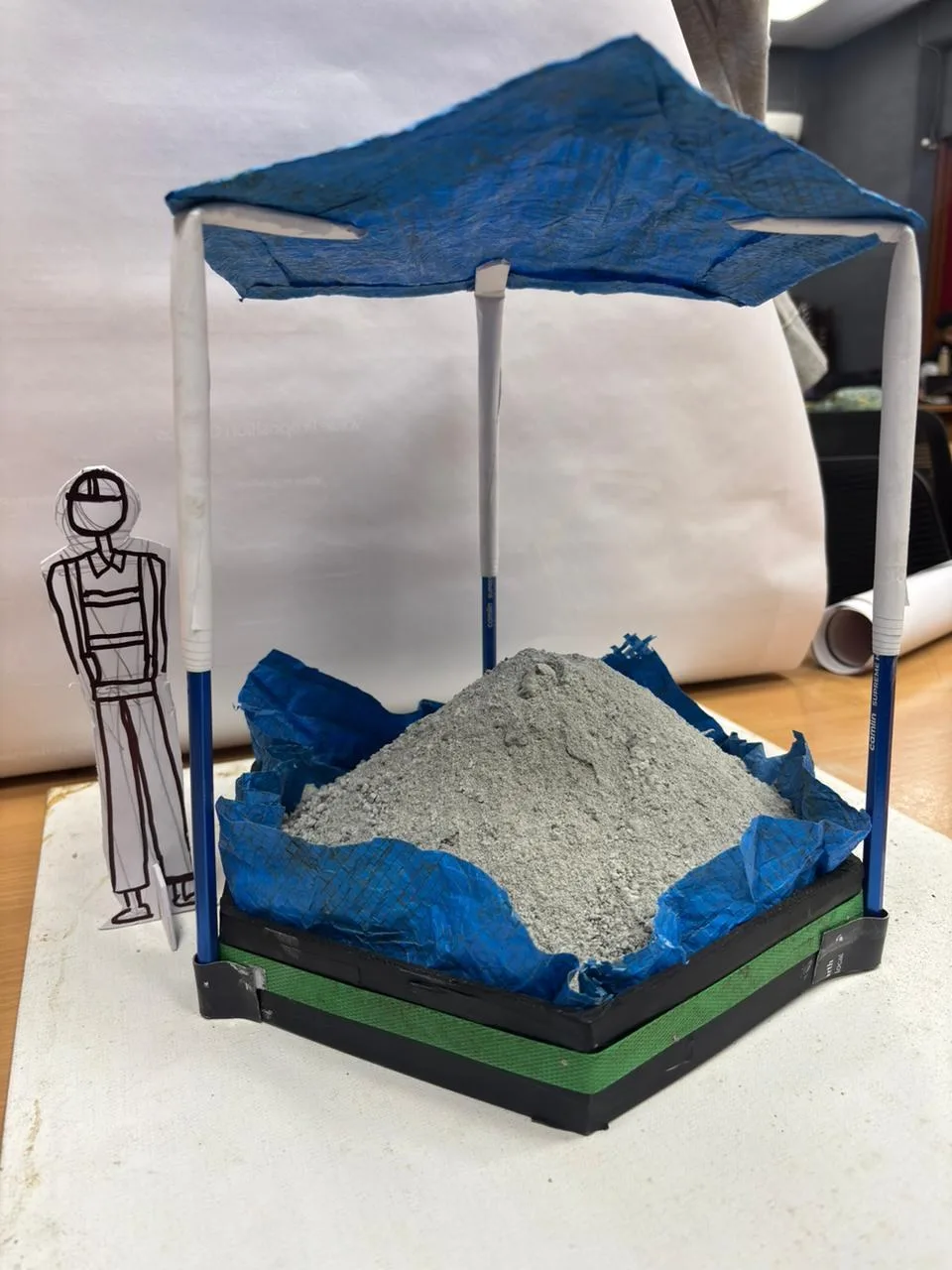
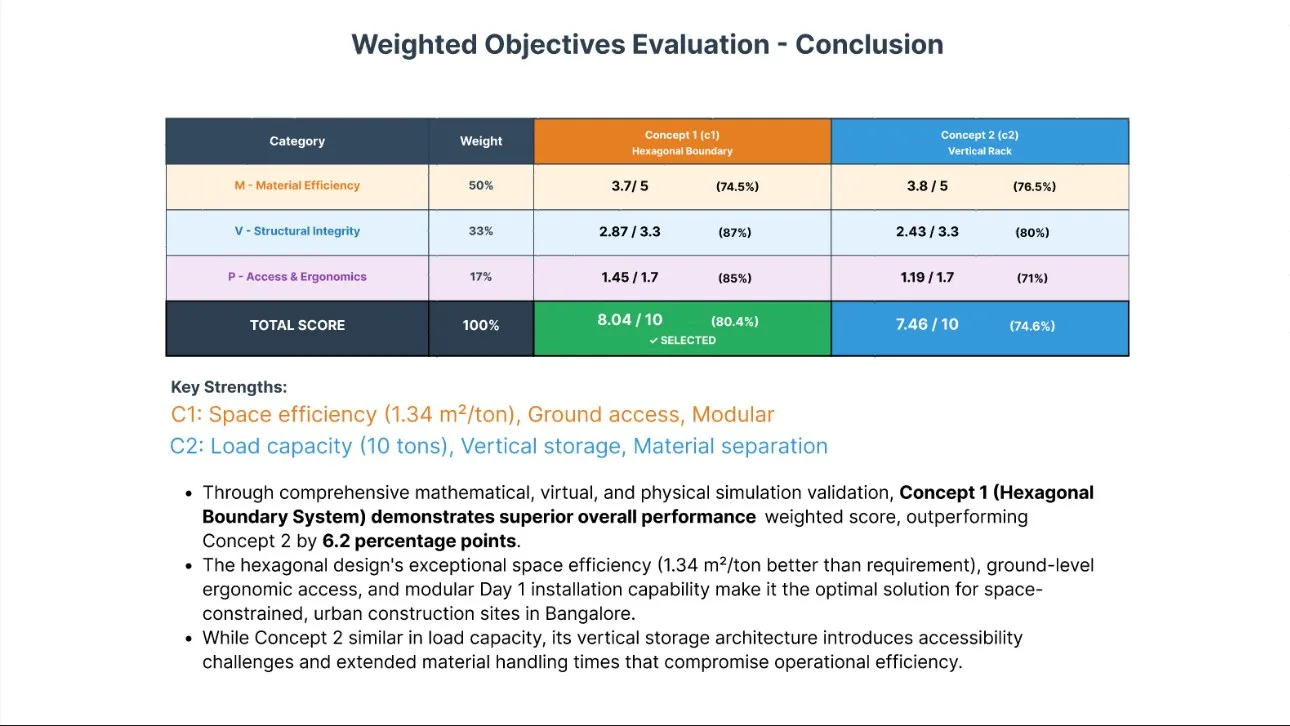
The second brief came from Bengaluru’s streets, where building materials sit in piles on the road, mixed, rained on and stolen. Two concepts, a hexagonal boundary system and a vertical rack, went through TRIZ, FMEA and mathematical, virtual and physical simulations. The hexagonal boundary won on space, protection and access.
Team projects, Creative Engineering Design and PD-236 Embodiment Design, IISc, Prof. Amaresh Chakrabarti, 2025–26 — with Bharath, Chorovelu, Shriya and Rushikesh. My part: design research, user and field research, ideation, function structure, fabrication and the decks.